
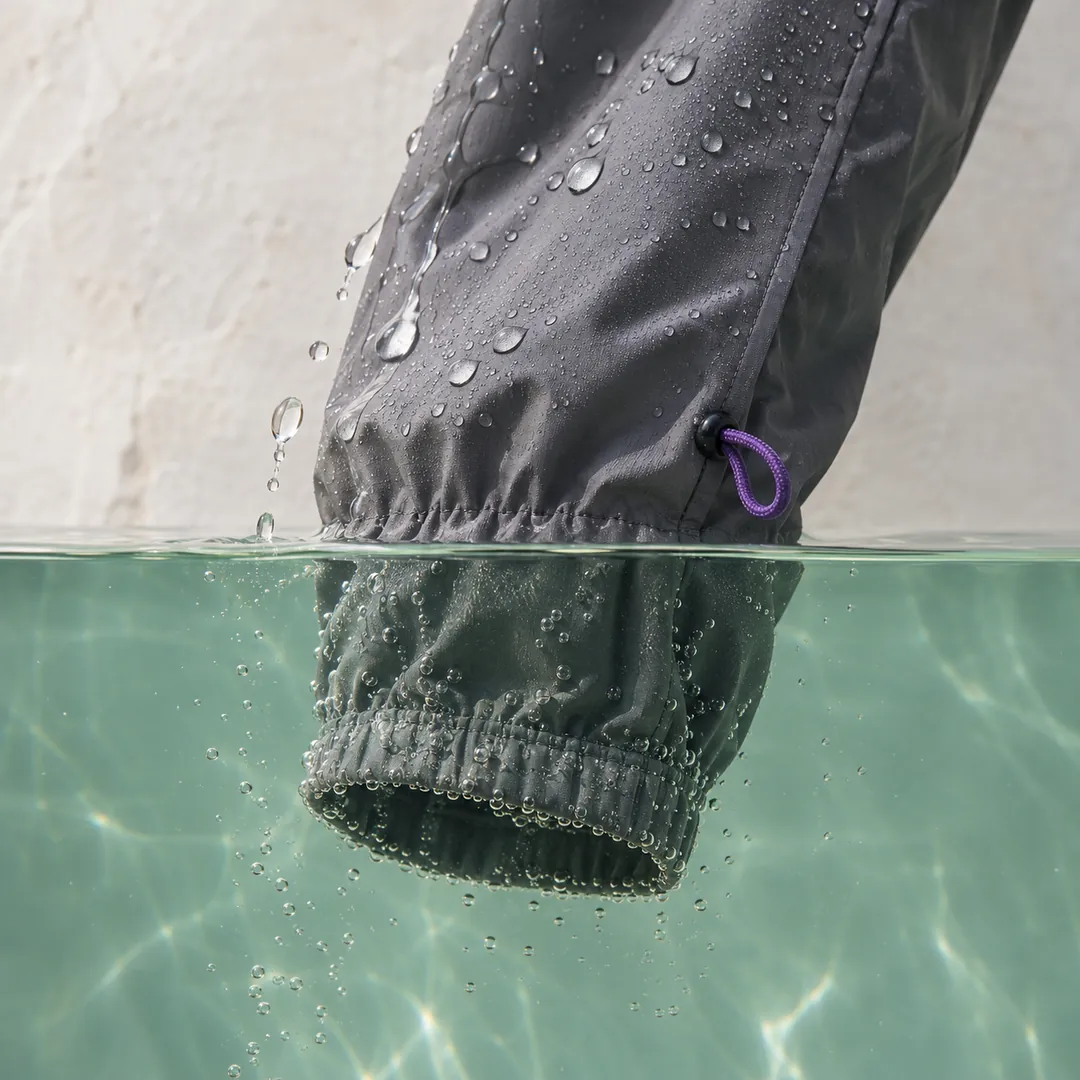
Some water filters do remove PFAS, and you can check which ones before you buy. EPA says point-of-use units that use granular activated carbon, ion exchange resin or reverse osmosis “can greatly reduce PFAS levels”, and it tells buyers to look for a PFAS reduction claim certified under NSF/ANSI 53 or NSF/ANSI 58. EPA also cautions that those certifications, as of April 2024, “do not yet indicate that a filter will remove PFAS down to the levels EPA has now set”. Whether you need one depends on your water: EPA says a filter “may not be useful” if PFAS have not been measured in your water or are below federal limits, and most Mississippi public water systems tested by EPA, including both of Jackson’s, reported no PFAS at all.
Maredes is a Jackson, Mississippi company that designs water treatment and reuse systems for one building at a time, starting from a laboratory test of the water. This guide covers which filters reduce PFAS, the federal rule as of November 2026, EPA’s data for Mississippi, private well testing and how to check a model’s claim. Certification marks in general are covered in our guide to NSF/ANSI 42, 53, 58 and 401 certifications.
Do water filters remove PFAS? What EPA’s research says
Filters that use activated carbon, anion exchange resin or a reverse osmosis membrane can remove most of the PFAS that have been studied, for as long as they are maintained. They work less well on some short-chain PFAS, and a filter without a certified PFAS claim gives you no assurance at all.
PFAS (per- and polyfluoroalkyl substances) are a large family of manufactured chemicals. EPA’s home filter page says they “repel oil and water and resist heat”, which is why they turn up in nonstick cookware, food packaging, waterproof clothing, stain-resistant furniture and firefighting foam. The same page says PFAS in drinking water “can be a significant portion of a person’s total PFAS exposure” and that exposure “may lead to health problems”. The two most studied are PFOA and PFOS.
Activated carbon
Activated carbon is carbon processed to have a very large internal surface that holds chemicals as water passes through. EPA’s 2018 research summary, Reducing PFAS in Drinking Water with Treatment Technologies, calls it “the most studied treatment for PFAS removal”. EPA researcher Thomas Speth put the limit plainly: “GAC can be 100 percent effective for a period of time, depending on the type of carbon used, the depth of the bed of carbon, flow rate of the water, the specific PFAS you need to remove, temperature, and the degree and type of organic matter as well as other contaminants, or constituents, in the water.”
The same summary says carbon “works well on longer-chain PFAS like PFOA and PFOS”, while shorter-chain PFAS such as PFBS and PFBA “do not adsorb as well”. A 2023 EPA modeling study of more than 400 commercially available PFAS, described in Science Matters, predicted that 76 to 87 percent of them could be treated cost-effectively by granular activated carbon, with the rest needing further study.
Ion exchange resin
Ion exchange resin is a bed of small plastic beads that hold charged contaminants. EPA’s research summary explains that “Negatively charged ions of PFAS are attracted to the positively charged anion resins”, so the resin used for PFAS is anion exchange resin, which it calls “effective for removing negatively charged contaminants, like PFAS”. This is not the resin inside a water softener: a softener uses cation exchange resin to swap out calcium and magnesium, and it does not reduce PFAS. Our treatment selector lists softeners, sediment filters, UV and boiling among the things that do not remove PFAS.
Reverse osmosis
Reverse osmosis (RO) pushes water through a membrane so fine that most dissolved substances stay behind and go to the drain. EPA’s research summary says high-pressure membranes such as RO and nanofiltration “are typically more than 90 percent effective at removing a wide range of PFAS, including shorter chain PFAS”. Because a membrane sends a concentrated waste stream to the drain, the summary suggests the technology is “perhaps” best suited “as a point of use technology for a homeowner, since the volume of water being treated is much smaller”. Household RO units commonly add sediment and carbon cartridges around the membrane, as University of Nebraska Extension’s guide to reverse osmosis describes, so a typical unit combines two of the three methods.
| Technology | How EPA describes it | EPA’s price range, before maintenance | What to watch |
|---|---|---|---|
| Granular activated carbon | Porous carbon that traps chemicals | $20 to $1,000 | Limited capacity; shorter-chain PFAS hold less well |
| Ion exchange resin | Beads that “attract and hold” contaminants | $20 to $1,000 | Limited capacity; not the same resin as a softener |
| Reverse osmosis | A thin barrier in a three, four or five stage process | $150 to $1,000 | Cartridge and membrane changes; water sent to the drain |
The price ranges and the stage count come from EPA’s page on identifying filters certified to reduce PFAS, which also says that “Filters are only effective if they are maintained according to the manufacturer’s instructions”. EPA’s April 2024 fact sheet adds that not replacing a filter on the manufacturer’s schedule “can increase your risk of exposure to PFAS”.
What the federal PFAS rule says as of November 2026
The April 2024 limits of 4.0 parts per trillion for PFOA and PFOS still stand. In May 2026 EPA proposed letting water systems ask for two more years to meet them, to 2031, and proposed rescinding the limits for four other PFAS; as of EPA’s pages updated October 8, 2026, both were still proposals.
A part per trillion (ppt) is one nanogram per liter. It is a thousandth of a part per billion, the unit lead results are often given in, as in Jackson’s water quality report. EPA’s final PFAS rule page lists the limits announced on April 10, 2024. A maximum contaminant level (MCL) is the enforceable limit for a public water system; a maximum contaminant level goal (MCLG) is the non-enforceable health goal.
| PFAS | Goal (MCLG) | Enforceable limit (MCL) | Status of the limit in November 2026 |
|---|---|---|---|
| PFOA | Zero | 4.0 ppt | In force; extension to 2031 proposed |
| PFOS | Zero | 4.0 ppt | In force; extension to 2031 proposed |
| PFHxS | 10 ppt | 10 ppt | Rescission proposed |
| PFNA | 10 ppt | 10 ppt | Rescission proposed |
| HFPO-DA (GenX chemicals) | 10 ppt | 10 ppt | Rescission proposed |
| Mixtures of PFHxS, PFNA, HFPO-DA and PFBS | Hazard Index of 1 | Hazard Index of 1 | Rescission proposed |
Compliance is judged on running annual averages at each sampling point, not on a single result. Under the 2024 rule, public water systems must finish initial monitoring by 2027, start giving the public information on these PFAS in 2027, and, where levels exceed the limits, put solutions in place by 2029. EPA says it expects the rule, over many years, to prevent PFAS exposure in drinking water for about 100 million people.
The two May 2026 proposals
On May 18, 2026, EPA announced two proposed rules. The compliance extension proposal keeps the 4.0 ppt limits for PFOA and PFOS but sets up a federal exemption that would let a system request two more years, so that it complies “by April 2031”. Systems granted an exemption would still monitor and report on the 2024 schedule. Systems with a PFOA or PFOS result at or above 12 ppt would have to take short-term steps to reduce exposure during the exemption, and every system operating under one would have to tell its customers through public notices and its annual water quality report.
The rescission proposal would remove the limits for PFHxS, PFNA, HFPO-DA and the Hazard Index mixture. EPA says the proposal is “solely based on a need to correct” the process used in 2024, and that when it evaluates more PFAS in the future, “it is possible that the result could be more stringent requirements”. EPA held a virtual hearing on both proposals on July 7, 2026, and the comment periods closed on July 20, 2026.
What your utility has to tell you
EPA’s UCMR 5 page says community systems must print any UCMR result at or above the reporting level, with its average and range, in the annual Consumer Confidence Report, which is due to customers each year by July 1. Under the 2024 rule, utilities must also start giving customers information on PFAS levels in 2027. If your report says nothing about PFAS or UCMR 5, ask.
The rule covers public water systems only. EPA’s private wells page says private wells are “not regulated by the Federal Government under the Safe Drinking Water Act nor by most state governments”, so for a well owner the testing is still yours to arrange.
Start with your water system’s PFAS results
If you are on city or rural water, your utility’s PFAS results come before any filter decision. EPA’s fact sheet says to “contact your local water provider to find out which PFAS, if any, are in your drinking water”, and that if PFAS “have been measured but are below federal limits, a filter may not be useful to you”.
Most of those results come from the fifth Unregulated Contaminant Monitoring Rule, known as UCMR 5. EPA published it on December 27, 2021. It required sampling for 29 PFAS and lithium between 2023 and 2025 at every community and non-transient non-community system serving 3,300 people or more, plus a nationally representative sample of 800 smaller systems. EPA released the final dataset in August 2026, and anyone can search it in the UCMR 5 Data Finder.
What a non-detect means
A UCMR 5 result below the minimum reporting level (MRL) is recorded as less than the MRL, often called a non-detect. EPA defines the MRL as the lowest concentration that at least 75 percent of laboratories nationwide can measure with 95 percent confidence. For the 29 PFAS it ranges from 2 to 20 ppt, and for PFOA and PFOS it is 4 ppt, which happens to sit right at the 4.0 ppt limit. A non-detect for PFOA therefore means “below 4 ppt”, not “zero”.
EPA also says UCMR 5 results “do not indicate compliance or noncompliance with the MCLs”. Compliance will be judged on the rule’s own monitoring; UCMR 5 took only two samples at groundwater locations and four at surface water locations.
The national picture
EPA’s July 2026 UCMR 5 Data Summary, posted on its occurrence data page, found at least one sampling location average above a 2024 limit at 15.5 percent of large systems (serving more than 10,000 people), 8.3 percent of systems serving 3,300 to 10,000 and 7.1 percent of smaller ones; weighted by system size, EPA estimates 7.8 percent nationwide.
Jackson’s two systems
JXN Water’s 2025 Water Quality Report says that all rounds of UCMR 5 monitoring for the City of Jackson surface water system (PWS ID MS0250008) and the Maddox Road groundwater system (MS0250012) “resulted in all non-detects”. EPA’s data files agree: they hold 360 results for the surface water system and 330 for the Maddox Road system, and none is at or above the reporting level. What the Jackson report does show, including disinfection byproduct violations in 2025 and the lead results, is covered in our guide to whether Jackson tap water is safe to drink.
Small systems and rural water associations
A small town system or rural water association is a public water system too, with its own PWS ID and its own annual report, and MSDH posts those Consumer Confidence Reports by year. A system serving fewer than 3,300 people was sampled under UCMR 5 only if it was drawn into EPA’s random national sample, so it may have no PFAS results until the rule’s initial monitoring. If your report is unclear, ask the utility three things: whether any of the 29 PFAS were found at or above the reporting levels, whether it has sampled since, and whether it plans to change sources or treatment.
What EPA’s data show for Mississippi
Five of the 234 Mississippi public water systems with complete UCMR 5 results had a sampling location whose average PFOA or PFOS level was above the 4.0 ppt limit. Of all 239 Mississippi systems in EPA’s data, 230 reported no PFAS at or above the reporting levels.
We downloaded EPA’s UCMR 5 data files for all states on November 22, 2026 and repeated EPA’s comparison for Mississippi. The files hold results for 239 Mississippi systems: 232 that draw only groundwater and 7 that use surface water. Of 46,862 PFAS results, 80 were at or above the reporting level, and they came from 9 systems; 4 of those had detections but no location average above a limit. To check the method, we ran the same calculation for every state and matched EPA’s published counts for large systems exactly: 472 above the PFOA limit and 523 above the PFOS limit.
| System (PWS ID) | Sampling locations with full results | Locations averaging above a limit | Highest location average, PFOA | Highest location average, PFOS |
|---|---|---|---|---|
| City of Corinth (MS0020002) | 6 | 1 | 4.2 ppt | 5.3 ppt |
| City of Holly Springs (MS0470002) | 2 | 1 | 6.5 ppt | 9.4 ppt |
| City of Oxford (MS0360011) | 5 | 2 | 4.3 ppt | 52.9 ppt |
| Smiths Crossing Water Assn (MS0640014) | 5 | 2 | below 4 ppt | 5.4 ppt |
| University of Mississippi (MS0360015) | 3 | 2 | 5.3 ppt | 2.1 ppt |
| All other Mississippi systems with full results (229) | n/a | 0 | n/a | n/a |
Mississippi’s share, about 2 percent, is lower than EPA’s national estimate, but small systems outside EPA’s random sample have no UCMR 5 results at all, and these averages come from 2023 to 2025 sampling. The utility’s latest report, not this table, is the reference for what reaches your tap now.
To look up your own system, find its PWS ID on your annual water quality report (Jackson’s prints both IDs at the top), filter the Data Finder by state and system, and read the “Average > MCL” indicator for each location.
Private wells: no one tests for PFAS unless you do
A private well has no PFAS data unless its owner pays for a laboratory test. Mississippi State University Extension’s Publication 2775, using 2018 data, counted 382,398 Mississippians, 12.81 percent of the state, on private wells.
The Mississippi State Department of Health tests private wells “for bacteriological contamination only” and says that “Testing for mineral content, chemicals or other contaminants should be done through a private laboratory.” In April 2025 MSU Extension’s Mississippi Well Owner Network offered free bacteria screening to well owners in Tate County and PFAS sampling kits to the first 21 who asked. Events like that are occasional, so most owners should plan on a paid test.
What test to ask for
EPA’s laboratory methods page says EPA Methods 533 and 537.1 together measure 29 PFAS and are the methods approved for UCMR 5 and the PFAS rule; it “cannot address the performance” of “modified” methods in general. Ask the laboratory before you sample:
- Which method do you use: EPA Method 533, EPA Method 537.1, or a modified method?
- Which PFAS are on your report, and what is your reporting limit for PFOA and PFOS?
- Are you certified for this method by a state program, and which one?
EPA advises homeowners to ask their state’s laboratory certification program whether it has certified laboratories for PFAS; MSDH lists certified laboratories for drinking water. Use the laboratory’s containers and follow its sampling instructions exactly. Kits versus laboratories in general are covered in our guide to home water test kits versus a certified lab.
Reading a PFAS laboratory report
Check the units first. A laboratory may report in nanograms per liter (ng/L), the same as parts per trillion, or in micrograms per liter (µg/L), as EPA’s UCMR files do; EPA says to multiply a µg/L value by 1,000 to get ng/L, so 0.0087 µg/L is 8.7 ppt. A compound not found appears as “ND” or as a value below the laboratory’s reporting limit, which means below that limit, not zero. Compare PFOA and PFOS with 4.0 ppt; a laboratory whose reporting limit is above 4 ppt cannot tell you which side of that line you are on. Our water test reader covers lead, nitrate, arsenic and other common results, but not PFAS.
Which wells deserve a PFAS test first
No source gives Mississippi well owners a risk map. The Mississippi Department of Environmental Quality’s undated PFAS information page says the state “has not been a major producer of PFAS and currently does not have any PFAS manufacturers operating”, but that it has “a wide range of industry that uses PFAS”. It names landfills, fire training facilities and wastewater treatment plants as common areas of concern, and says multiple military and federal facilities are being assessed. A well near one of those, or near a public system with detections in the table above, is a reasonable place to start testing. The rest of a well’s care, from bacteria tests to the well cap, is in the private well checklist.
Example (fictional). The Quillen household’s well is about a mile from a former fire training ground. A laboratory running EPA Method 533 reports (fictional numbers) PFOA at 9 ppt, PFOS at 12 ppt and no other PFAS above its reporting limits. The 4.0 ppt limits do not legally apply to a private well, but the Quillens use them as their yardstick. Following EPA’s advice for well owners, they call MSDH and MDEQ, use bottled water for drinking, cooking and baby formula while they decide, and have a plumber install an under-sink unit whose listing shows “PFOA Reduction” and “PFOS Reduction”. Six weeks later they test the treated tap with the same laboratory and method, so they know what the filter does in their water.
Which filter types reduce PFAS, from pitchers to reverse osmosis
Every common point-of-use format can carry a certified PFOA and PFOS claim: pitchers, faucet-mounted and countertop units, under-sink filters, under-sink reverse osmosis and refrigerator filters. The format decides capacity, flow and upkeep; the certified claim decides whether it reduces PFAS.
On NSF’s listing of products with PFOA and PFOS reduction claims, checked November 22, 2026, the product types include “Pour Through” (pitchers), “Counter-Top Connected to Sink Faucet”, “Plumbed-In to Separate Tap”, “Plumbed-In” and “Refrigerator Filter”. Each listed model shows its replacement element, its rated service cycle in gallons, its flow rate and the claims it carries.
Do pitcher filters remove PFAS?
Some do. A pitcher is a pour-through filter, usually carbon and resin, and some pour-through models on NSF’s listing carry PFOA and PFOS claims. Many do not, so the model number matters, not the brand. University of Nebraska Extension’s guide to activated carbon notes that pour-through and faucet-mounted units hold small amounts of carbon and give the water little contact time. A small cartridge also means a small rated service cycle, so check the gallons on the listing against what your household drinks and cooks with each day.
Faucet and refrigerator filters
Faucet-mounted and countertop units connect to the kitchen faucet, and Nebraska Extension notes they can have bypass valves so they filter only when switched on. Refrigerator filters treat only the door dispenser and ice; NSF’s PFOA and PFOS listing includes original and aftermarket refrigerator cartridges, each under its own model number. A refrigerator filter does nothing for the kitchen tap, and a faucet filter does nothing for the ice.
Under-sink carbon and reverse osmosis
Under-sink filters hold more carbon than a pitcher and usually feed their own faucet, an arrangement Nebraska Extension says increases the life of the carbon. Reverse osmosis units add a membrane, a small storage tank and a drain connection, and WaterSense lists PFAS among the contaminants they “can potentially remove”.
Do you need a whole-house PFAS filter?
Usually not. EPA’s steps to reduce PFAS exposure say “only a small amount of PFAS can get into your body through your skin”, so “showering, bathing, and washing dishes in water containing PFAS are unlikely to significantly increase your risk”. The water to treat is the water you swallow: the kitchen tap, the refrigerator and ice maker, and in a business the break room, coffee brewer and ice machines. Our page on drinking water systems describes how each drinking and ice point in a building is listed and treated separately.
How to check a filter’s PFAS claim before you buy
Look up the exact model in the directory of the body that certified it and confirm that “PFOA Reduction” and “PFOS Reduction” appear on its claim list. A certification mark on a box tells you the product is certified for something, not that it is certified for PFAS.
EPA names five ANSI-accredited certification bodies that evaluate filters for PFAS reduction: CSA Group, IAPMO R&T, NSF, UL and WQA. EPA’s fact sheet says a claim may appear “on its outer packaging, in a performance data sheet within the package, or on the manufacturer’s website”, and that if in doubt you should check “the certification body’s product directory website”. The steps:
- Find the mark and the standard. Note which body’s mark is on the box and whether it cites NSF/ANSI 53 or NSF/ANSI 58.
- Open that body’s directory. Use the directory of the body whose mark is on the box, because each body lists only the products it certified.
- Search by model and by cartridge number. The listing names the housing model and its replacement element; a replacement cartridge from another maker needs its own listing.
- Read the claim list. Look for “PFOA Reduction” and “PFOS Reduction”. Some models on NSF’s listing also show “Total PFAS Reduction”; the listing does not explain that test, so read the performance data sheet for the compounds and concentrations used.
- Note the service cycle. The gallons figure on the listing is the model’s rated service cycle; replace at or before it, and enter it in the filter life calculator.
- Read the footnotes. NSF’s listing notes, for some models, which version of NSF/ANSI 53 the PFOA and PFOS claim was evaluated to, such as the 2021 or 2022 version.
One detail trips people up with reverse osmosis. In NSF’s directory, checked November 22, 2026, PFOA and PFOS claims appear under NSF/ANSI 53, and the NSF/ANSI 58 listing for RO systems showed claims such as arsenic, fluoride, lead, nitrate and total dissolved solids but no PFOA or PFOS claim in its text. Some listed RO membranes are certified to NSF/ANSI 58 for “material requirements only”, which means no reduction claim at all. If an RO unit is sold as reducing PFAS, find where that claim is listed, in which body’s directory and for which cartridge.
Wording that should make you look again
- “Removes PFAS” with no standard named. EPA’s advice is to look for NSF/ANSI 53 or 58 and a PFAS reduction claim.
- “Tested to” a standard. That describes a test someone ran, not a listing you can look up. EPA calls certification by an independent entity “an assurance that the filter works as the manufacturer says it does”.
- A listing for a different cartridge, or a materials-only listing. Neither tells you the cartridge you are buying reduces PFAS.
When Maredes specifies point-of-use equipment, the specification names the standard and the exact claim for each tap, and the listing is checked before anything is bought. That is the same check this list describes, and you can do it yourself in a few minutes.
What a certified PFAS claim does not tell you yet
A certified claim tells you the model reduced PFOA and PFOS in a standard test. It does not yet tell you the filter will get your water down to 4.0 ppt, and it says nothing about your cartridge after its rated gallons. EPA’s words: “the current certification standards for PFAS filters (as of April 2024) do not yet indicate that a filter will remove PFAS down to the levels EPA has now set for a drinking water standard. EPA is working with standard-setting bodies to update their filter certifications to match EPA’s new requirements.” EPA follows that with: “In the meantime, remember that reducing levels of PFAS in your water is an effective way to limit your exposure.”
Only two of 29
As of April 2024, EPA says, filter certifications “focus on removing the chemicals PFOA and PFOS”. UCMR 5 measured 29 PFAS, and EPA’s summary shows they often occur together. A claim for PFOA and PFOS says nothing on its own about PFBS, PFBA or other short-chain compounds that carbon holds less well.
Capacity and breakthrough
Carbon and resin have a fixed number of places to hold contaminants. Nebraska Extension’s carbon guide explains that once those places fill, contaminants can pass through and “the contaminant concentration in the ‘treated’ water may actually be higher than in the untreated water”. This is called breakthrough. The same guide says most units have no automatic shutoff and that saturation and breakthrough “can occur long before a pressure change occurs”. Water with more organic matter or other chemicals uses up capacity faster, which is why the rated gallons are a ceiling, not a promise.
Example (fictional). A kitchen filter’s listing gives a rated capacity of 750 gallons, the manufacturer sets a six-month maximum, and the household draws 3 gallons a day for drinking and cooking. In the filter life calculator, the gallon rating is reached in 250 days and the time limit in 182 days, so the cartridge is replaced every 182 days (about 6.0 months), limited by time in service, which means 2.0 replacements a year. A household that also runs an ice maker through the same filter could reach the gallon rating first and change it sooner.
The only proof is a test of the treated tap
Nebraska Extension says “the only way to be certain if a filter is successfully removing contaminants is by repeated testing of the filtered water”. For PFAS that means a sample from the treated faucet, analyzed by the same method as the original test, a few weeks after installation and again before the cartridge’s planned change. Write the results and each change in a maintenance log.
Does a Mississippi household or business need a PFAS filter?
If your utility’s results are non-detects, as Jackson’s are, EPA’s own guidance suggests a PFAS filter may not be useful, and your money is better spent on treatment for what your report does show. If your system averaged above a limit, or you are on an untested well, test or ask first and then choose a certified unit for the taps you drink from.
| Your situation | What the data say | A reasonable next step |
|---|---|---|
| City water, PFAS results all non-detect (Jackson's two systems) | EPA: a filter "may not be useful" | Choose treatment for what the report does show, such as lead or disinfection byproducts |
| City water, PFAS detected but below the limits | EPA: a filter "may not be useful" | Your choice; if you filter, use a certified PFOA and PFOS claim at the drinking tap |
| City water, a location average above 4.0 ppt | The utility must act by 2029, or by 2031 under an exemption if the proposal is finalized | Ask the utility for current results and plans; consider a certified point-of-use filter meanwhile |
| City water, system not in UCMR 5 | No federal PFAS data yet; initial monitoring is due by 2027 | Ask the utility whether it has tested; decide after you see a result |
| Private well, never tested for PFAS | Unknown | Test with EPA Method 533 or 537.1 at a certified laboratory, nearby risk sites first |
| Private well, PFOA or PFOS detected | EPA's well advice applies | Call the state agencies; use another source for drinking and cooking until a certified filter is in place and tested |
For well owners with a detection
EPA’s advice for households on wells is to contact the state environmental or health agency, to compare results with state standards or, where a state has none, with EPA’s health advisory levels for PFOA and PFOS, and, if concerned, to “consider using an alternate water source for drinking, preparing food, cooking, brushing teeth, preparing baby formula, and any other activity when your family might swallow water” and to consider certified in-home treatment. If anyone in the household has specific health concerns, EPA says to talk to a doctor. This article does not give health advice.
For businesses
A business on city water is in the same position as a household: read the utility’s results first. A business with its own well can be more than a well owner. EPA’s definition of a public water system includes one that “regularly supplies water to at least 25 of the same people at least six months per year”, with schools, factories, office buildings and hospitals as examples. EPA’s UCMR 5 Data Summary notes that the PFAS rule covers all community and non-transient non-community systems. If that describes your building, the system may be regulated, PFAS monitoring may be required of it, and MSDH’s Bureau of Public Water Supply is the office to ask.
Example (fictional). A 14-person insurance office on Jackson’s surface water system asks whether its break room needs a PFAS filter. The 2025 report shows UCMR 5 results all non-detect, but disinfection byproduct averages above the limits in early 2025 and a few high lead results at sampled homes. The office skips a PFAS purchase and chooses a unit whose listing carries lead and total trihalomethane claims, and it will read JXN Water’s next reports for the PFAS information due from 2027.
What a PFAS filter costs to buy and run
EPA puts carbon and ion exchange filters at $20 to $1,000 and reverse osmosis at $150 to $1,000, not counting maintenance. Running costs are replacement cartridges, membranes for RO, and for RO the water it sends down the drain.
EPA’s PFAS filter page says used cartridges and membranes “can be discarded in the trash”, because the contaminants stay captured in them. It does not give cartridge prices, and neither do we: ask the seller for the price of the replacement element named on the listing, then multiply by the replacements per year from the filter life calculator.
Reject water on a city bill
Sources differ because units differ. EPA’s PFAS filter page says RO “wastes about one gallon of water per every gallon treated”; WaterSense says a typical point-of-use unit sends “five gallons or more” of reject water down the drain per gallon produced, while WaterSense labeled units must send “2.3 gallons of water or less” and have a membrane that lasts at least one year.
For example, suppose a household draws 3 gallons of RO water a day (a hypothetical figure). At 5 gallons of reject per gallon, that is 5,475 gallons a year; at 2.3, about 2,519. JXN Water bills combined water and sewer, from March 23, 2026, at $7.48 per CCF for the first 50 CCF, with 1 CCF equal to 748 gallons, which works out to $10.00 per 1,000 gallons. At that rate the reject water costs about $55 a year in the first case and about $25 in the second. Your rate and block may differ, so use your own bill.
What to do next
If your utility reports non-detects, you can stop at step 2.
- Find your source. City or rural water, or a private well. Homes on city water can start with the homes overview; well owners go to step 4.
- Read your utility’s PFAS results in its annual report and the UCMR 5 Data Finder.
- If results are above 4.0 ppt, or there are none, ask the utility for its latest results and plans.
- On a well, test first at a certified laboratory using EPA Method 533 or 537.1.
- Pick the tap, then the unit. Confirm “PFOA Reduction” and “PFOS Reduction” in the certifier’s directory.
- Size the cartridge with the filter life calculator and log each change.
- Test the treated tap after installation, with the same method as the first test.
- Check your other results. The treatment selector matches treatment to lead, nitrate, chlorine taste or bacteria, which many buildings need more than a PFAS filter.
If you would like the decision made from a laboratory result for every drinking point in your home or building, a water review starts there, and you can get in touch to ask about one. For the rest of the drinking water series, see the drinking water hub.