
Air-conditioning condensate calculator
Air handlers in a humid climate drip clean, low-mineral water all summer. Estimate how much, as a range rather than one number.
For: Owners and managers of hotels, offices, clinics and apartment buildings with central air
Calculator
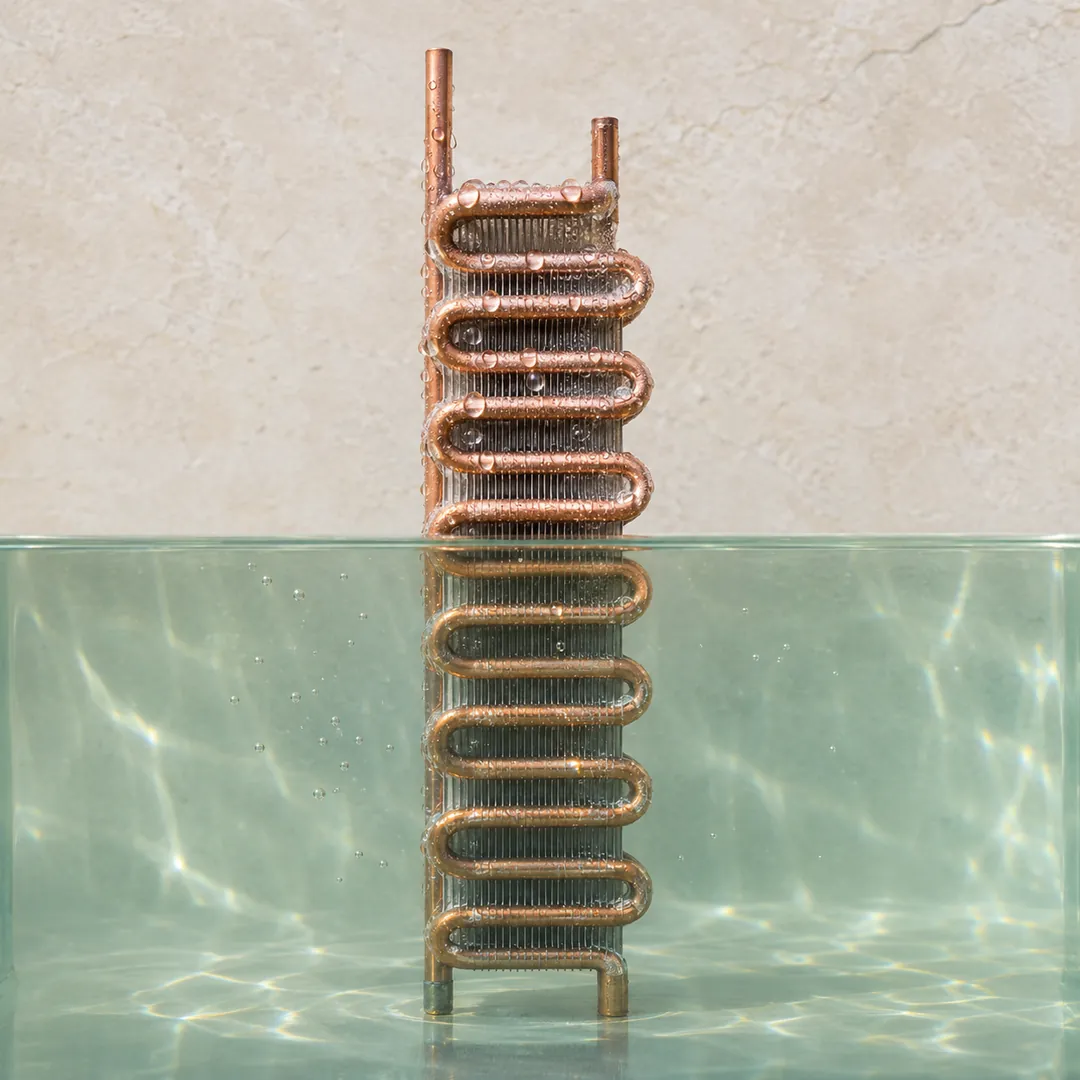
When warm, humid air crosses a cooling coil, water condenses on the coil and runs to a drain. In most buildings that water goes straight to the sewer or onto the ground. This calculator estimates how much of it a building makes on a cooling day and over a cooling season, as a range. It is for owners and managers of hotels, offices, clinics and apartment buildings with central air handlers who want to know whether condensate is worth collecting.
The Department of Energy notes that “a large amount of condensate can form on cooling coils in areas with hot, humid summers such as the southeastern United States.” Jackson fits: NOAA’s 1991 to 2020 normals give 2,402.3 cooling degree days a year and a July mean temperature of 82.1 F at Jackson International Airport.
The method
EPA WaterSense at Work puts condensate generation at 3 to 10 gallons per day per 1,000 square feet of air-conditioned space. The calculator applies that range directly:
- Low and high per cooling day = floor area divided by 1,000, times the low rate and times the high rate.
- Midpoint for planning = the average of the two.
- Per cooling season = the low and high daily figures times the number of cooling days.
- Toilet flushes the midpoint could supply = the midpoint divided by gallons per flush, as a sense of scale.
The calculator asks for floor area rather than cooling tonnage because EPA states its range per floor area.
The inputs and where to find them
- Air-conditioned floor area served by the units you would collect from. Take it from the floor plans or the mechanical schedule, and count only air handlers whose drains can be piped to one collection point. Small in-room units each drain separately, which makes them harder to collect from.
- Low and high rates. EPA’s 3 and 10. Narrow the range once you have measured.
- Days per year with steady cooling. 180 is a planning assumption for a humid Southern city. Adjust it for your building’s cooling season.
- Gallons per flush. Only for the comparison row; 1.28 is the WaterSense maximum.
The default example
Example (fictional). The Pearlbank Hotel, a fictional 96-room hotel, cools its guest rooms with in-room units, which are not counted, and its lobby, corridors and meeting rooms with central air handlers serving about 50,000 square feet. At EPA’s 3 to 10 gallons over 180 cooling days, the calculator returns: condensate on a cooling day, low end 150 gal; high end 500 gal; midpoint for planning 325 gal; per cooling season, low to high, 27,000 gal to 90,000 gal; toilet flushes the midpoint could supply per cooling day 254.
Averaged over the whole year, the 325-gallon midpoint on 180 days is about 160 gallons a day (325 x 180 / 365). That is the condensate figure the tank sizing calculator adds to roof rain in the same fictional example, where both feed one tank for drip irrigation.
Reading the result
Read the answer as a range. EPA says condensate is highest during high cooling loads, and humid summers push toward the high end. That timing is useful: the days with the most condensate are the days a cooling tower needs the most make-up water and the landscape needs the most irrigation. EPA calls condensate “a good source for cooling tower make-up water.”
Before sizing a tank, measure. Put a container and a timer under one air handler’s drain on a humid afternoon and again on a mild morning. Two readings from your own equipment narrow EPA’s range more than any calculator can.
Water quality and limits
EPA describes condensate as “generally high-quality and free of minerals and total dissolved solids,” but it can grow bacteria, and it may carry copper when coils are cleaned. Where people can touch or inhale it, as with spray irrigation, EPA says it should first be filtered and disinfected, and EPA recommends disinfection for all water used indoors. Condensate drain work falls under the Mechanical classification of the Mississippi State Board of Contractors, so a licensed mechanical contractor does the piping.
A small first step can be a pilot system: condensate from one air handler to one use, for a fixed term, with written measures. For the full picture, combine this estimate with the rainwater calculator, or see how Maredes plans rainwater and condensate capture for hotels and small commercial buildings.
Start with a water review.
Tell us about the building: what it is, who uses it, where the water comes from and what you would like to change. We reply with questions and a time to walk the building with you.